
The real cost of owning property in Mauritius after purchase
A buyer focused look at the real cost of owning property in Mauritius after purchase, including upkeep, utilities, insurance and rental related costs.

Buying a property in Mauritius is only the first financial step. Once the deed is signed, ownership brings a different set of costs: maintenance, utilities, insurance, service charges and, for rented properties, tax and management expenses.
These costs vary according to the property type, location, use and level of service. A beachfront villa, a gated estate home, a Smart City apartment and a family house inland will not carry the same yearly budget. This article looks at the real cost of owning property in Mauritius after purchase, from a buyer’s point of view.
Why post purchase costs matter before buying
Many buyers focus carefully on the purchase price, notary fees and registration duty. That is necessary, but it does not give the full picture. Long term comfort depends on what the property will cost to hold, maintain and use over time.
In Mauritius, two properties with the same purchase price can create very different ownership budgets. A villa with a private pool, garden and security needs more upkeep than a lock up and leave apartment. A coastal property may require more exterior maintenance than an inland home. A co-owned residence may simplify management, but it usually comes with recurring charges.
For buyers comparing budgets, the useful question is not only “Can I buy this property?” It is also “Can I own it comfortably?”
For a broader view of the acquisition stage itself, our article on the property buying process in Mauritius for foreign buyers explains the main steps before completion.
Maintenance and repairs after completion
Maintenance is often the first recurring cost buyers underestimate. It includes routine upkeep, small repairs and periodic work that protects the property’s condition and value.
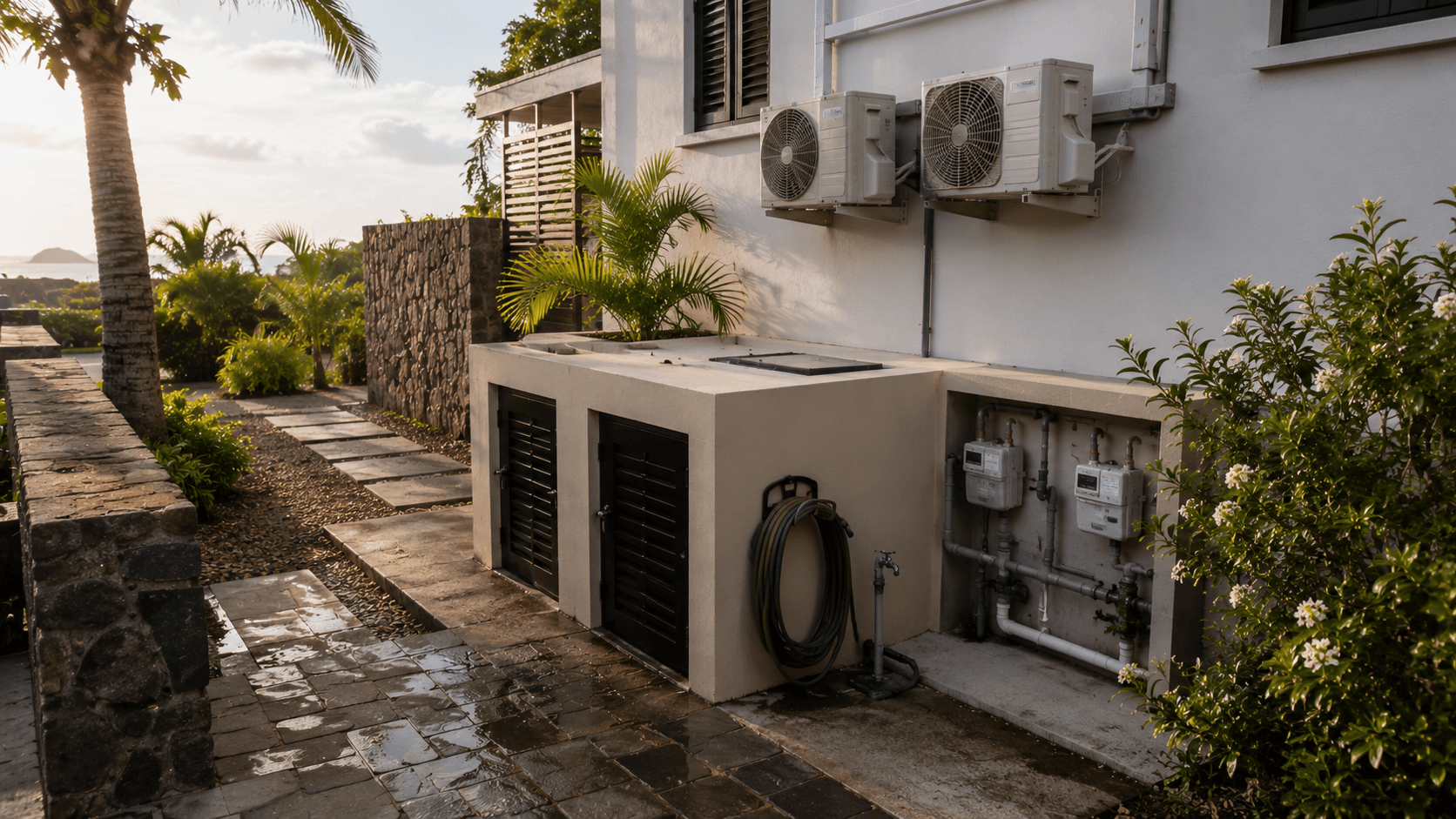
For a villa, the main maintenance items often include garden care, pool servicing, pest control, painting, roof checks, waterproofing, air conditioning servicing and exterior cleaning. For an apartment, individual upkeep may be lighter, but owners still need to budget for internal repairs, appliances, furniture, air conditioning and normal wear.
Mauritius also has a tropical climate. Sun exposure, humidity, heavy rain, salt air in coastal areas and cyclone season can affect materials. This does not make ownership difficult, but it does make regular maintenance important.
A practical post purchase budget should include:
routine monthly or quarterly upkeep
annual servicing for air conditioning and equipment
exterior maintenance for exposed properties
a reserve for unexpected repairs
replacement costs for appliances and furniture over time
Buyers should ask for recent maintenance records where available, especially for a resale property. For a new build, it is worth checking what is covered by warranties and what remains the owner’s responsibility from the first year.
Syndic fees, estate charges and shared management
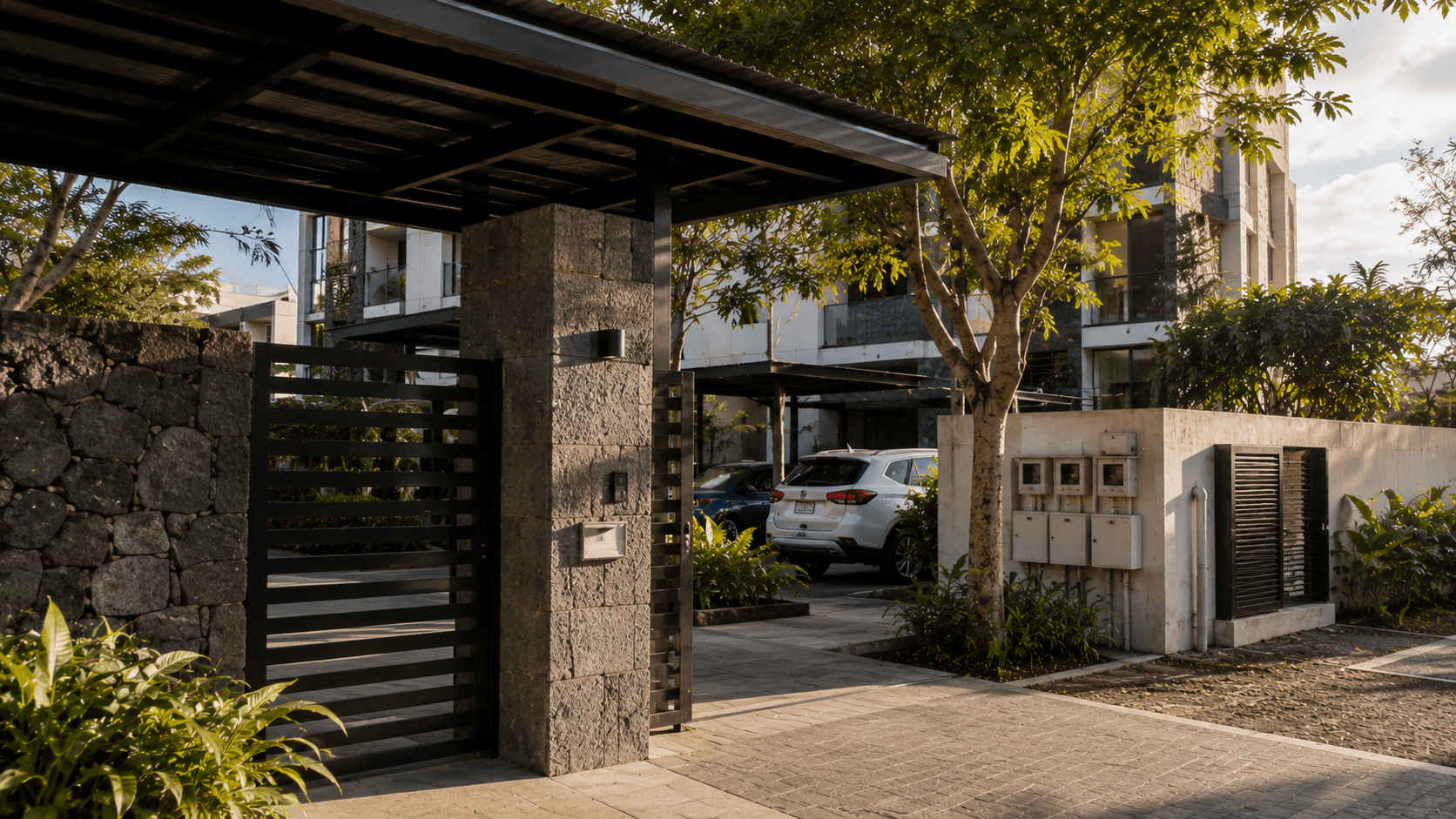
For apartments, residences, gated estates and mixed use developments, ownership often includes shared charges. In Mauritius, these may be described as syndic fees, co-ownership charges, estate charges, service charges or homeowners’ association fees, depending on the structure.
These charges are not only another line in the ownership budget. They usually reflect the work required to manage shared parts of the property: common areas, security, landscaping, lifts, lighting, pools, roads, waste management, maintenance contracts, insurance for shared areas and reserve funds for future works.
Before buying, ask for:
the current syndic fee or service charge
what the charge includes and excludes
the latest annual budget, if available
the reserve fund or planned major works
the rules on unpaid charges and owner obligations
how decisions are made for repairs and upgrades
whether charges may increase after handover or full occupation
Utilities, insurance and daily running costs
Daily running costs depend heavily on how the property is used. A full time residence, holiday home and rental property will not consume electricity, water, internet and services in the same way.
Electricity is often the most variable utility cost, especially where air conditioning, pool pumps, water heaters and large appliances are used regularly. Water, internet, television, alarm systems and private security services may also form part of the monthly budget.
Insurance is another important cost. Many owners insure the building, contents or both, depending on the property type and ownership structure. In Mauritius, buyers often look for cover that reflects local risks such as cyclone, flood, burglary, fire and other damage. If the property is financed, the bank may also have insurance requirements.
For co-owned buildings or managed residences, some common insurance may already be arranged at development level, but this does not necessarily replace the owner’s need for private cover. Buyers should check the exact insurance structure before assuming that everything is included.
For overseas owners, cleaning, gardening, pool care, security checks, minor repairs and professional property management should also be treated as separate ownership costs.
Rental tax and local charges to check
For a private residential property, owners should not assume that municipal tax is automatically payable or automatically exempt. No municipal tax is levied on a qualifying family home used as the owner’s permanent main residence, subject to an application to the relevant local authority. Other properties, including second homes, rental properties and residential properties that are not the owner’s permanent residence, may remain subject to municipal rates.
Tax becomes more relevant if the property produces income. If a property is rented, the rental income may need to be declared, and withholding or reporting obligations may apply depending on the structure, tenant and owner profile. Non resident owners should be particularly careful to understand how Mauritius sourced income is treated.
This article does not replace tax advice. The important buyer side point is that an investment property has a different cost profile from a purely private residence. Management fees, letting fees, repairs between tenants, vacancy periods, licensing requirements for certain rental uses and income tax all affect the real net result.
For buyers considering rental use, our article on how rental investment works in Mauritius explains the investment angle in more detail.
Plan for three ownership budgets
When comparing properties, buyers should therefore look at three budgets:
the purchase budget
the first year setup budget
the yearly ownership budget
The first year can be more expensive because it may include furnishing, equipment, decoration, repairs, insurance setup and initial management arrangements. Later years may become more predictable, provided regular maintenance is not neglected.
Frequently asked Questions
What are the main costs after buying property in Mauritius?
The main costs are maintenance, utilities, insurance, syndic or estate charges and property management fees where applicable. Rental properties may also involve tax, letting and management costs.
Is home insurance required in Mauritius?
It depends on the property, financing and ownership structure. Even when it is not legally required in every case, insurance is usually an important way to protect the property.
Do owners pay tax if they rent their property in Mauritius?
Rental income may be taxable and may trigger filing or withholding obligations depending on the owner profile and rental structure. Owners should confirm their position with a tax adviser or the Mauritius Revenue Authority.
Owning property in Mauritius with a clearer budget
A clear ownership budget helps protect both comfort and value. It also allows buyers to compare properties more accurately, especially when choosing between apartments, villas, gated estates, coastal homes and rental assets.
Planning to buy property in Mauritius? Our team can help you compare properties with the full ownership picture in mind, from lifestyle fit to ongoing costs and management needs.
Discover our properties | Contact us
Sources
The information contained in this article is provided for general guidance only and reflects the situation at the time of publication. Property ownership costs, local charges, insurance requirements, service charges, rental obligations, tax rules and management expenses may vary according to the property, location, ownership structure and applicable regulations. Readers are advised to verify any important information with qualified professionals and the relevant authorities before making any purchase, rental or investment decision.
About the Author