

Buying Property on Mauritius' East Coast
Explore Mauritius' east coast for lagoon living, lower density and a quieter coastal lifestyle shaped by space, climate and retreat appeal.

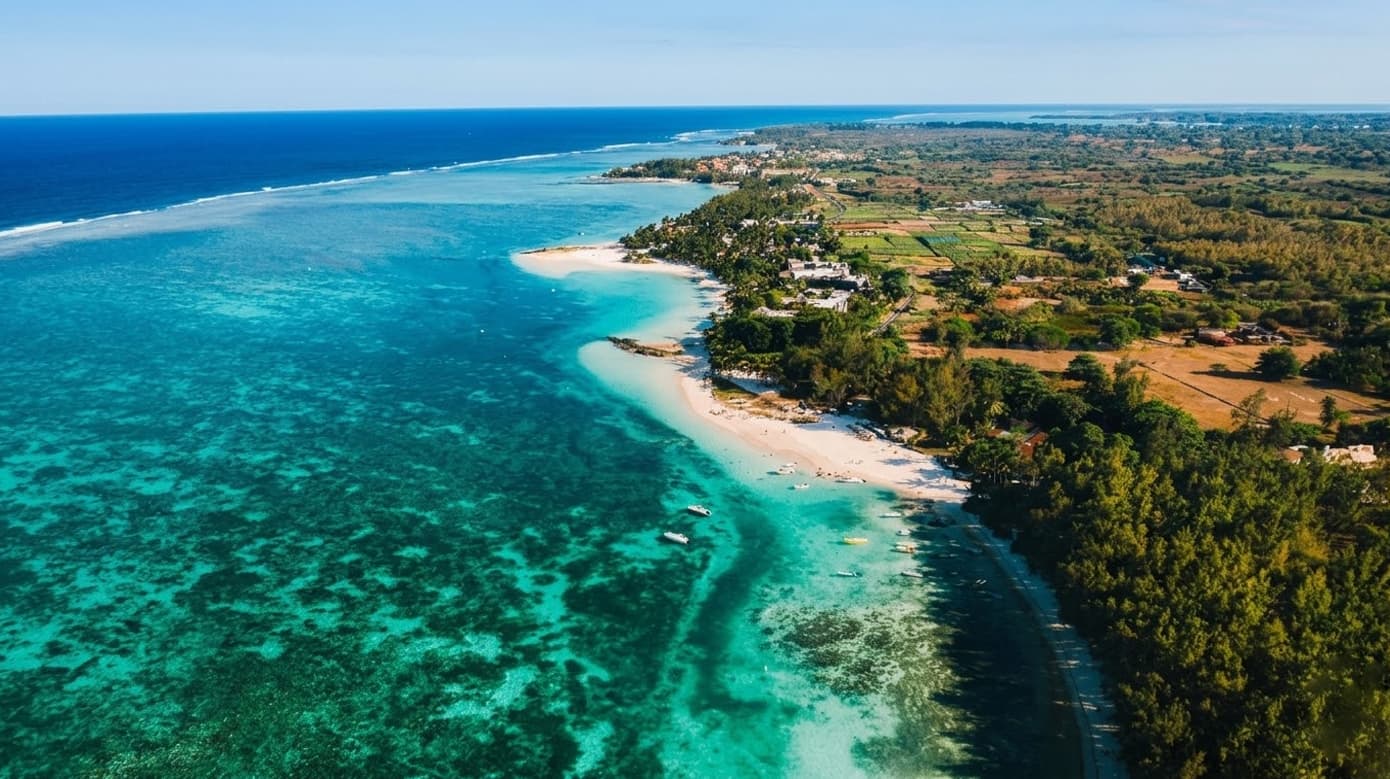
Buying property on Mauritius' east coast is defined by space, lagoon quality and a slower rhythm of living. For buyers who prioritise open beaches and lower density over daily convenience, it offers a retreat-led property choice rather than a practical residential base.
From Belle Mare and Palmar to Trou d'Eau Douce and Poste Lafayette, the east coast remains lower-density and less urbanised than Mauritius' main residential hubs. Demand here is driven more by second-home and resort-adjacent lifestyle appeal than by everyday residential convenience.
Understanding what makes the east coast distinctive is essential before buying. This article examines who the east suits, how daily life functions, how climate shapes the experience, and which coastal pockets align with different ownership priorities.
How the East Coast Differs From the North and West
Buyers looking for walkability and urban convenience may find that the east coast offers a very different living experience.
Unlike the north or more connected parts of the island, the east coast offers fewer day-to-day services along the shoreline. Most major services require driving beyond the immediate coastal strip.
Development patterns on the east reflect this geography. Properties tend to sit within or adjacent to resort zones rather than forming dense residential corridors. Neighbouring developments are rare. Visual openness and physical distance from other buildings define much of the coastline.
For buyers accustomed to walkable neighbourhoods or proximity to urban amenities, the east coast requires a mental shift. Daily life here assumes vehicle access and a willingness to drive inland for routine needs.
Who the East Coast Suits Best
Buying property on the east coast attracts a specific profile: owners who prioritise lifestyle over logistics. Most commonly, it suits:
Second-home owners and expatriates who do not rely on the property for year-round residence
Buyers prioritising lagoon access over proximity to services
Semi-retired owners seeking calm and space rather than social activity
Expats and buyers already familiar with Mauritius who understand the trade-offs involved
The east coast is less suited to families needing schools nearby, daily commuters, or buyers looking for a more connected and active setting. It is generally a better fit for buyers who are comfortable with a quieter lifestyle and greater reliance on vehicle access.
This distinction matters. The east coast rewards owners who view property as a retreat rather than a hub. Buyers who need convenience will find the region frustrating. Those who value space and lagoon quality will find it compelling.
What Drives Value on the East Coast
East coast property appeal is driven less by convenience and more by lagoon quality, space and visual openness.
The east offers some of Mauritius' longest and least urbanised lagoons. Protected by offshore reefs, these lagoons provide calm, shallow water ideal for swimming, kayaking, stand-up paddleboarding and lagoon living at its best. The east offers long, largely continuous stretches of open shoreline compared with more urbanised coastlines.
Space is the second driver. Plot sizes on the east tend to be larger than those in the north or west. Neighbouring properties sit further apart. The sense of being surrounded by other developments (common in high-demand areas like Grand Baie or Flic-en-Flac) is largely absent here.
Visual openness reinforces this appeal. The east coast's low-rise architecture and limited coastal construction mean views remain largely unobstructed. Buyers seeking privacy, ocean views and a sense of retreat value this more than proximity to restaurants or nightlife.
These factors make the east particularly appealing to buyers focused on lifestyle, space and retreat-oriented ownership. The east coast appeals less through convenience than through calm, space and a slower coastal rhythm. It is better understood as a retreat-led property choice than a convenience-driven residential one.
East Coast Climate and Trade Winds
The east coast's climate is an important part of the ownership experience and should be considered carefully before buying.
The east is more exposed to trade winds, especially from May to October, when conditions are cooler and breezier than on the west coast. From November to April, conditions are generally warmer and calmer.
For some buyers, this is a drawback. Those seeking year-round warmth and still conditions often prefer the west or north. For others, particularly kitesurfers and windsurfers or buyers sensitive to heat, the east's windier climate is a feature, not a flaw.
The east coast has a more seasonal feel than some other parts of the island. Buyers who value consistently sheltered and warm conditions may prefer the west or north, while those who appreciate breezier and cooler periods may find the east especially appealing.
Understanding this distinction is critical. The east coast's climate is not a weakness to be downplayed, but a characteristic that suits certain buyers and not others.
Best Areas on Mauritius' East Coast
The east coast is not a single market. It is a collection of distinct pockets, each with its own character and buyer appeal.
Area | Best suited for | Defining traits | What to know |
Belle Mare · Palmar | Second homes, resort living | Long lagoon beaches, resort integration, established amenities | Structured resort environment with access to spas, beach clubs and golf courses |
Trou d'Eau Douce | Lagoon + village balance | Harbour access, local shops, gateway to Île aux Cerfs | More activity and infrastructure than other east coast areas |
Poste Lafayette Roches Noires Bras d'Eau | Privacy seekers, nature-focused buyers | Low density, dramatic coastline, national park adjacency, maximum space | Some stretches are rockier and more exposed, so each property should be assessed individually. |
Each pocket suits different buyer intentions, not simply different budgets. Areas such as Roches Noires and Bras d'Eau fall into the same low-density coastal category as Poste Lafayette, appealing to buyers who prioritise space, nature and minimal development over beach swimming or resort amenities. Choosing the right area on the east coast requires understanding what kind of daily life and ownership experience you prioritise.
Daily Life on Mauritius' East Coast
Before buying on the east coast, be honest about what you need day-to-day. This region asks you to choose calm over convenience.
Key infrastructure realities:
Schools: Many international schools are located beyond the immediate east coast area, so schooling usually involves driving inland or towards other regions.
Healthcare: Higher-level medical facilities are also located outside the immediate coastal strip, which makes vehicle access important for day-to-day practicality.
Shopping: Larger supermarkets require driving inland to Flacq. Coastal shops cover essentials only.
Dining: Options are limited. Most restaurants are resort-based or require driving to nearby villages.
This infrastructure reality explains why the east coast attracts fewer families with school-aged children and fewer long-stay professionals. Buyers who choose the east accept these trade-offs in exchange for space, calm and lagoon access.
For many owners, this is not a compromise but a deliberate choice. The absence of urban intensity is precisely what makes the east coast appealing. Buyers who view driving as an inconvenience will struggle with the east. Those who view it as part of a quieter lifestyle will find it manageable.
Property Types and Foreign Ownership on Mauritius' East Coast
East coast properties are primarily villas and low-rise residences. High-rise apartment developments are rare. Most properties fall into three main categories:
Property type | Typical buyer | Key characteristics |
Luxury villas and ocean-view residences within resort schemes | Non-resident owners, buyers seeking turnkey solutions | Structured living with managed facilities (pools, beach clubs, gyms, security). Minimal maintenance responsibility |
Standalone villas and luxury residences | Long-term owners, buyers prioritising independence | Larger plots, more privacy, requires self-management or local staff |
Resort-adjacent developments | Hybrid buyers | Proximity to resort amenities without full integration into managed schemes |
Urban apartment stock is limited on the east coast. Buyers seeking compact, low-maintenance units will find fewer options here than in the north or on the plateau.
Foreign buyers can purchase property on the east coast of Mauritius through EDB-approved schemes, including PDS, Smart City developments and eligible G+2 apartments, with most non-citizen opportunities found within approved developments.
Is the East Coast Right for Your Lifestyle
The east coast suits buyers who value:
Lagoon quality over logistical convenience
Calm and space over social energy
Privacy and openness over proximity to services
Second-home or semi-retirement ownership over primary residence
The east coast is less suited to:
Families needing schools nearby
Daily commuters
Buyers seeking year-round warmth and sheltered conditions
Buyers prioritising ease of resale or a more active residential market may prefer the north or west.
If you prioritise retreat, space and lagoon access over convenience, the east coast can be a strong fit. If you need daily infrastructure nearby or a more active setting, other regions may suit you better.
The east coast rewards buyers who understand what it is: retreat living over residential convenience, not the other way around.
If you are still comparing the east with other parts of the island, our comparison of the best areas to buy property in Mauritius gives the broader regional picture.
Frequently Asked Questions
Can you live year-round on Mauritius' east coast?
Yes. It suits buyers who are comfortable with a quieter, more car-dependent lifestyle and do not need major services close by every day.
Is Mauritius' east coast windier than the west?
Generally yes, especially from May to October, when trade winds are more persistent and east coast temperatures are cooler.
Where are the best lagoons on Mauritius' east coast?
Belle Mare and Palmar are the strongest fit for long lagoon beaches and resort-style surroundings. Trou d'Eau Douce adds more village character, while Poste Lafayette and Bras d'Eau feel more secluded and nature-led.
Can foreigners buy property on Mauritius' east coast in 2026?
Yes, but only through approved frameworks and developments recognised under Mauritius' property rules for non-citizens. Always verify the scheme and current EDB requirements before signing.
What properties can you buy on Mauritius' east coast?
The east coast is mainly composed of villas, low-rise residences and resort-linked properties rather than dense urban apartment stock.
How far are schools and hospitals from the east coast?
Most higher-level services are outside the immediate coastal strip, so daily life generally involves driving beyond the beachfront area.
Ready to explore east coast living?
Considering property on Mauritius' east coast? Our team can help you assess which coastal pockets align with your ownership priorities, with no obligation.
Explore our properties | Contact us
Sources
Economic Development Board Mauritius — Real Estate & Hospitality
Economic Development Board Mauritius — Amendments to IRS, RES, IHS, PDS and SCS Regulations
Mauritius Meteorological Services — Climate Information and Data of Mauritius
National Parks and Conservation Service — Bras d’Eau National Park
Information provided is for general guidance only and should not be considered legal, financial or investment advice. Buyers should conduct independent due diligence and consult qualified professionals before making property decisions.
About the Author